
Read hearts. Launch your clinical career.
Intro to EKG Technician walks you step by step — from how the heart's electrical system works to placing all 10 electrodes, reading rhythms, and walking into your certification exam with confidence. No medical background required.
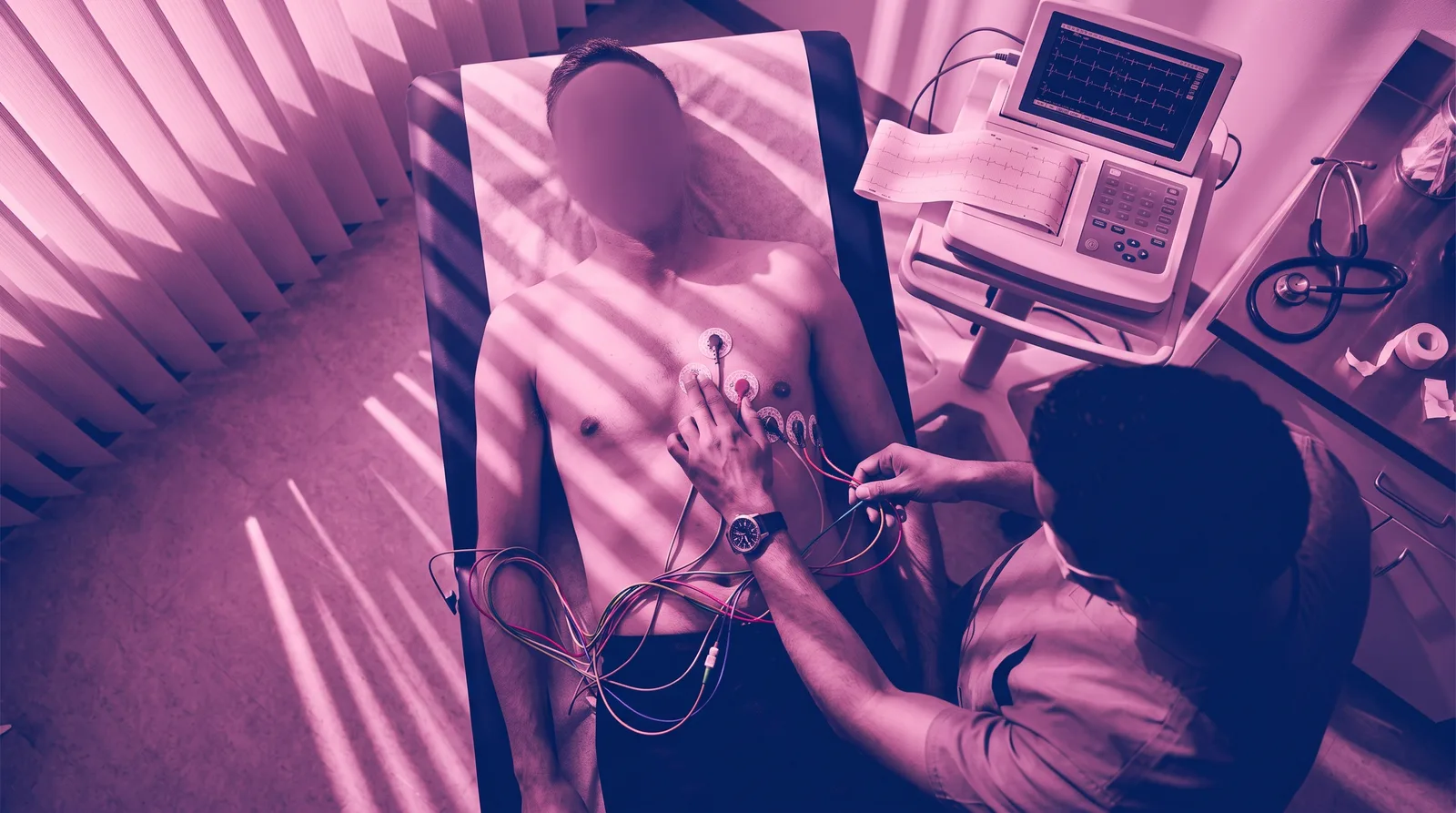
"When you understand why the heart does what it does, reading an EKG stops being intimidating and starts being genuinely fascinating — and that's exactly where we want to take you."
— LLH Online Learning
What you'll learn
What you'll be able to do
- Correctly place all 10 electrodes on a patient using standard 12-lead EKG protocol
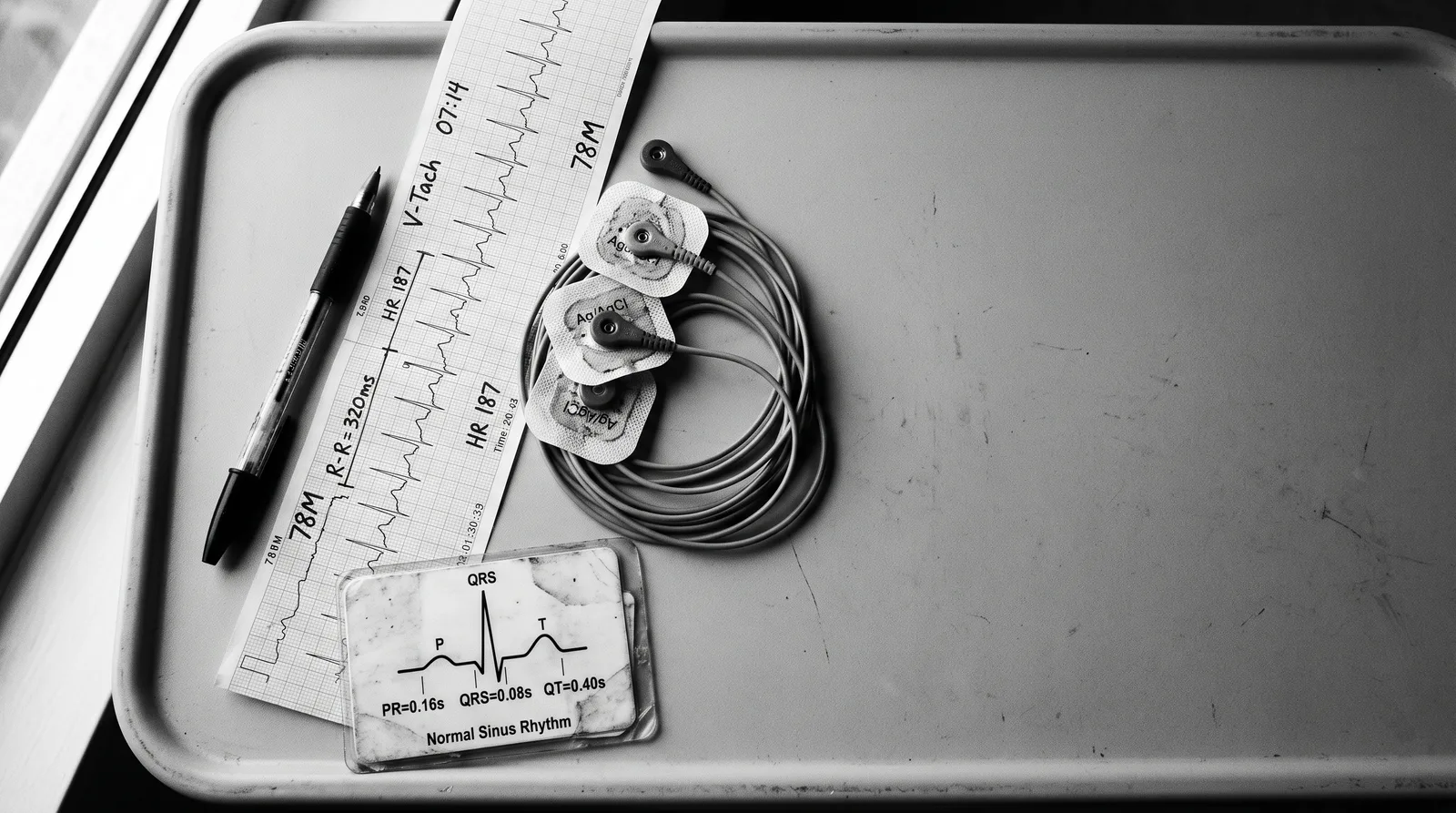
- Identify and label the key components of a normal EKG waveform (P wave, QRS complex, T wave)
- Recognize common cardiac arrhythmias including atrial fibrillation, bradycardia, and tachycardia
- Operate and troubleshoot EKG machines and resolve common artifact interference
- Apply patient preparation and communication best practices for accurate test results
- Understand the certification pathways and exam requirements to become a credentialed EKG Technician
How it works
A course that adapts to you
This isn't a set of static videos. Every lesson is generated live and tuned to where you actually are.
We learn your level
A quick placement check tailors your starting point so you're never bored or lost.
Lessons adapt as you go
Each lesson is written for your pace and your goal, adjusting as your skills grow.
Your AI coach keeps you moving
Checkpoints, feedback, and gentle nudges turn progress into a real result.
The curriculum
What's in your course
9 modules · 78 lessons

The Heart & the EKG: Building Your Foundation
Establishes essential cardiac anatomy, electrical conduction concepts, and the clinical role of the EKG Technician — no prior medical background needed.
- 1.1What Does an EKG Technician Actually Do?Included
- 1.2Medical Terminology for EKG TechniciansIncluded
- 1.3Cardiac Anatomy 101Included
- 1.4The Cardiac Cycle & Blood FlowIncluded
- 1.5The Heart's Electrical SystemIncluded
- 1.6Depolarization & RepolarizationIncluded
- 1.7How an EKG Machine WorksIncluded
Patient Preparation & Professional Communication
Covers everything that happens before the first electrode is placed — from greeting the patient to ensuring a clean, accurate recording.
- 2.1Communicating with Patients: Building Trust QuicklyIncluded
- 2.2Patient Identification & Verifying the EKG OrderIncluded
- 2.3Preparing the Patient for an EKGIncluded
- 2.4Infection Control & Standard PrecautionsIncluded
- 2.5Safety, Privacy & HIPAA BasicsIncluded
- 2.6Special Considerations: Diverse Patient PopulationsIncluded
- 2.7Professionalism & Patient-Centered CareIncluded
Electrode Placement & 12-Lead Acquisition
Provides hands-on mastery of correct limb and precordial electrode placement to produce a standard, diagnostic-quality 12-lead EKG.
- 3.1Understanding Leads, Electrodes & ViewsIncluded
- 3.2The 12 Leads & Planes of the HeartIncluded
- 3.3Placing the Limb ElectrodesIncluded
- 3.4Placing the Precordial (Chest) ElectrodesIncluded
- 3.5Locating Anatomical LandmarksIncluded
- 3.6Running & Saving a 12-Lead EKGIncluded
- 3.7Preventing Lead-Reversal & Placement ErrorsIncluded
- 3.8Performing an EKG from Start to FinishIncluded
Reading the EKG: Waveforms, Intervals & the Normal Tracing
Teaches systematic interpretation of a normal EKG strip, identifying every key component and measuring critical intervals.
- 4.1Anatomy of an EKG Strip: Grid, Waves & DeflectionsIncluded
- 4.2The P Wave, QRS Complex & T WaveIncluded
- 4.3Intervals & Segments: PR, QT & STIncluded
- 4.4Measuring EKG Waveforms & IntervalsIncluded
- 4.5Calculating Heart Rate from a TracingIncluded
- 4.6Evaluating Rhythm: A Step-by-Step ApproachIncluded
- 4.7Understanding Normal Sinus RhythmIncluded
- 4.8Documenting EKG Findings & Technician ResponsibilitiesIncluded
Recognizing Common Cardiac Arrhythmias
Builds pattern-recognition skills for the most clinically important arrhythmias an EKG Technician will encounter.
- 5.1Sinus Rhythms: Normal, Brady & TachyIncluded
- 5.2Sinus Arrhythmia & Sinus PausesIncluded
- 5.3Premature Atrial ContractionsIncluded
- 5.4Atrial FibrillationIncluded
- 5.5Atrial FlutterIncluded
- 5.6Premature Ventricular Contractions (PVCs)Included
- 5.7Ventricular TachycardiaIncluded
- 5.8Ventricular FibrillationIncluded
- 5.9AsystoleIncluded
- 5.10Heart Blocks: First, Second & Third DegreeIncluded
- 5.11Pacemaker RhythmsIncluded
- 5.12When to Alert the Clinical TeamIncluded
EKG Artifact, Troubleshooting & Equipment
Develops practical troubleshooting skills for producing accurate tracings and safely maintaining EKG equipment.
- 6.1Understanding EKG ArtifactIncluded
- 6.2Somatic Tremor & Patient MovementIncluded
- 6.3Wandering BaselineIncluded
- 6.4AC/Electrical InterferenceIncluded
- 6.5Poor Electrode ContactIncluded
- 6.6Recognizing Lead ReversalIncluded
- 6.7Operating & Maintaining EKG EquipmentIncluded
- 6.8Troubleshooting an Unreadable EKGIncluded
Ambulatory Monitoring & Stress Testing
Expands the student's knowledge beyond resting 12-lead EKGs to other common forms of cardiac monitoring.
- 7.1Introduction to Holter MonitoringIncluded
- 7.2Holter Monitor Placement & Patient InstructionsIncluded
- 7.3Event & Ambulatory Cardiac MonitorsIncluded
- 7.4Introduction to Exercise Stress TestingIncluded
- 7.5Preparing a Patient for a Stress TestIncluded
- 7.6Monitoring During Exercise TestingIncluded
- 7.7Recognizing Reasons to Stop or EscalateIncluded
Cardiac Emergencies & Patient Safety
Prepares students to recognize potentially serious situations that may occur before, during, or after an EKG procedure.
- 8.1Recognizing a Cardiac EmergencyIncluded
- 8.2Chest Pain & Acute Coronary Syndrome AwarenessIncluded
- 8.3Heart Attack Warning SignsIncluded
- 8.4Stroke Warning SignsIncluded
- 8.5Syncope & Near-SyncopeIncluded
- 8.6CPR/BLS & AED AwarenessIncluded
- 8.7Emergency Action PlansIncluded
- 8.8Emergency & Incident DocumentationIncluded
Certification Preparation & Career Launch
Brings the entire program together through comprehensive review, practice testing, professional preparation, and career-readiness activities.
- 9.1Comprehensive EKG Technician ReviewIncluded
- 9.2Cardiac Anatomy & Conduction ReviewIncluded
- 9.3Electrode Placement & 12-Lead ReviewIncluded
- 9.4Waveform & Rhythm ReviewIncluded
- 9.5Artifact & Troubleshooting ReviewIncluded
- 9.6Certification Pathways: CET, CET/EKG Credentials & Other OptionsIncluded
- 9.7Certification Exam StrategiesIncluded
- 9.8Timed EKG PracticeIncluded
- 9.9EKG Technician Mock Certification ExamIncluded
- 9.10Building Your EKG Technician RésuméIncluded
- 9.11EKG Technician Interview PreparationIncluded
- 9.12Where EKG Technicians WorkIncluded
- 9.13Your First 90 Days as an EKG TechnicianIncluded
Who it's for
Is this you?

The career-changer
She's leaving a non-clinical job and wants a clear, structured path into healthcare without going back to school for years.

The medical assistant
He already works in a clinical setting and wants to add EKG skills and a credential to move into a more specialized role.

The new grad
He studied health sciences or biology and wants job-ready technical skills to land his first clinical position.

The returning professional
She stepped away from the workforce and is re-entering healthcare with a need to build up-to-date, certifiable clinical skills.

The CNA leveling up
She's a certified nursing assistant who wants to expand her scope, earn more, and specialize in cardiac monitoring.

The second-career explorer
He's mid-career, drawn to meaningful work in healthcare, and wants a credential he can earn without a multi-year degree program.
Questions
Frequently asked
Online Learning
A note from LLH School of Phlebotomy & Healthcare Technicians
LLH Online Learning
If you've been thinking about breaking into healthcare but aren't sure where to start — or if you've looked at EKG Technician programs and felt intimidated by the medical terminology — I want you to know something: this field is genuinely learnable, and you don't need years of clinical experience to get there. You just need the right foundation, built in the right order.
I created Intro to EKG Technician because I've seen too many motivated, capable people get stuck at the starting line. They pick up a textbook, hit a wall of jargon, and assume the problem is them. It's not. The problem is that most resources are written for people who already work in clinical settings — not for someone walking in fresh. This course is different. Every concept is explained in plain language first, and the clinical precision follows naturally from that understanding.
Here's what that looks like in practice: before we ever pick up an electrode, we walk through how the heart actually generates its electrical signal and why that signal shows up as waves on a tracing. Before we talk about atrial fibrillation, we make sure you understand what a normal sinus rhythm looks like and how to evaluate one step by step. That sequence matters. When you understand the why, the technical skills stick — and you show up to clinical work with real confidence, not just memorized facts.
By the time you finish this course, you'll be able to place a full 12-lead EKG with proper technique, read a tracing systematically, recognize the rhythms that require immediate clinical attention, troubleshoot equipment issues on the fly, and communicate professionally with patients and care teams. And you'll know exactly how to pursue your certification — which pathway fits your goals, what the exam covers, and how to study for it efficiently.
This is the course I wish had existed when I was learning this material. If you're ready to take a clear, step-by-step path into a clinical career that's in demand and deeply meaningful, I'm glad you're here. Let's get started.
— LLH Online Learning
Start your journey today
Get instant access — learn at your own pace with an AI coach in your corner.
$99/mo
Recurring billing · cancel anytime
Secure checkout · Instant access
- 9 modules, 78 lessons
- AI-adaptive lessons tuned to your level
- Quizzes & checkpoints to lock in progress
- Your own AI learning coach
- Learn on any device, at your pace
- Full access for as long as you're subscribed
Optional add-ons inside
- The EKG Rhythm Cheat Sheet$19.99
Available in the school store after you join.